


The History Of Persian Chess Board Pieces
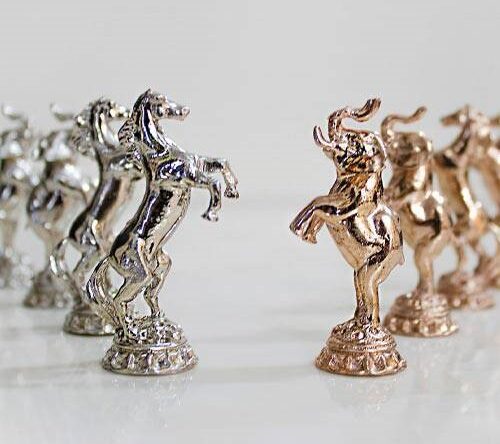
Luxury chess and Backgammon Set
The word “chess” is the Persian pronunciation of “Chaturanga”, a word used in Sanskrit to name this game with wooden Luxury chess and Backgammon Set.
Chess is so important and credible in today’s world that it can be placed next to other sciences. So it is not surprising that in civilized countries, chess players are seen as geniuses and exceptional people and are even awarded high academic degrees. Therefore, they have a prosperous life and play chess with enough leisure. To the extent that some of them have nothing to do but participate in international competitions.
Buying a Luxury chess and Backgammon Set
Chess tournaments are now held internationally every year in various forms, including individual, team, women, students, and even the blind. At a glance, it can be seen that the progress of a country is not unrelated to the development and influence of chess.
Chess is an Iranian invention. Some have called it the invention of the Indians, Greeks, Romans, Babylonians, Scythians, Egyptians, Jews, Chinese, and Arabs.
But what is more accepted than any other opinion is that chess was originally in India, then brought to Iran from India, spread from Iran to the Arabs and the Islamic world, and finally went to Europe from the Islamic world. In fifteenth-century Europe, chess became the way it is today; In the second half of the nineteenth century, the World Chess Championship began. In the twentieth century, the World Chess Federation was founded.
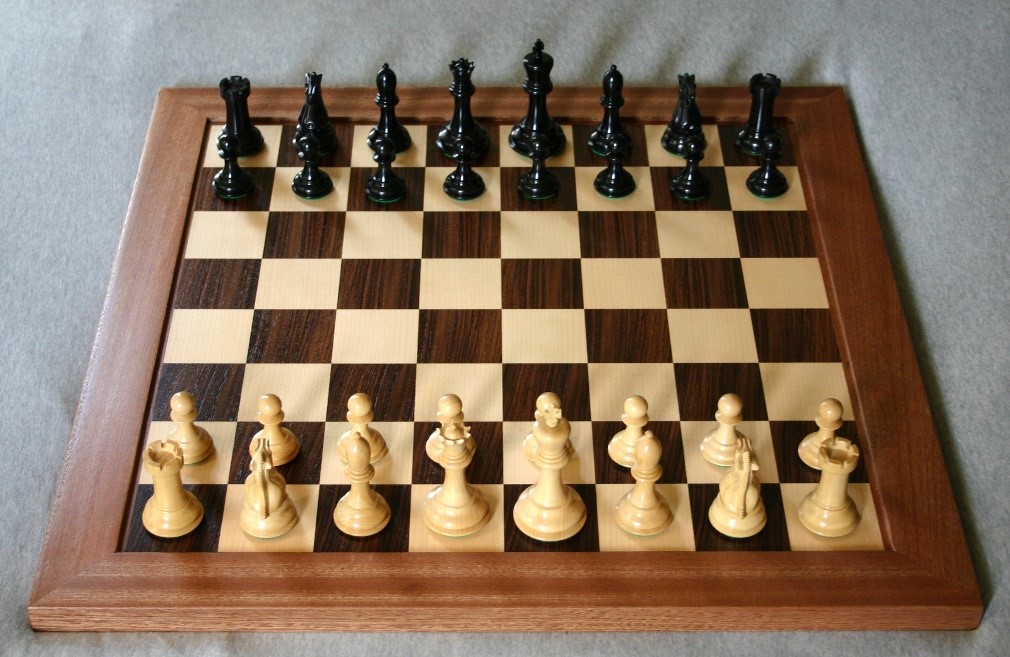
The chessboard is an 8 by 8 square board, one in black and white. The vertical columns facing the chess players are marked alphabetically (from A to H) and the horizontal rows are numbered (1 to 8).
16 white pieces in 16 two-row houses one and two and 16 black pieces are also placed in 16 houses two rows seven and eight, the board must be placed so that the first house to the right of both chess players is white.
Buying a Handmade Chess and Backgammon Set
Vertebrae:
Infantry (soldier)
Horse; Modern N – Classic C (Italian)
Elephant; Modern B – Classic F (Italian)
Rokh (castle); Modern R – Classic T (Italian)
Minister (Farzin); Modern Q – Classic D (Italian)
King; Modern K – Classic R (Italian)
Infantry (soldier)
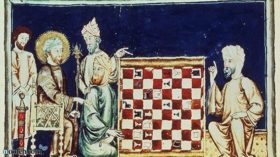
Sultan al-Faibi and Caliph Harun al-Rasheed were among those interested in chess.
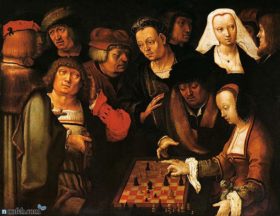
“Chess Players” (1508) by the famous Dutch painter Lucas van Leiden.
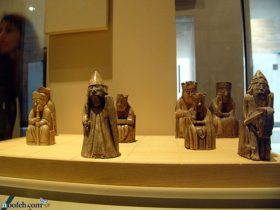
Old chess pieces belong to the Middle Ages
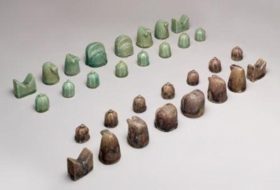 The 900-year-old Iranian chess pieces, discovered in Neishabour, is one of the oldest and most complete chess sets in the world, housed in the Metropolitan Museum of Art in New York.
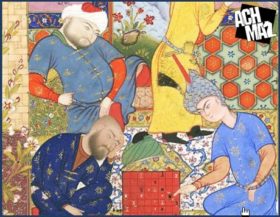 Chess game scene in “Seven Colors” by the famous Iranian poet “Jami” (kept in the Sclerk Museum and Freer Washington)
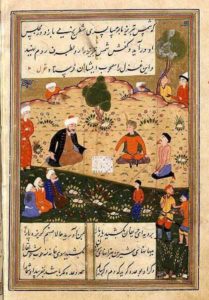 One of the oldest writings in Iran and the world that mentions chess, The book is the biography of Ardeshir Papkan (Karnamak Artakhshir Papkan).
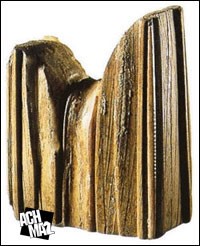 Ninth-century face nut (found in Neishabour)
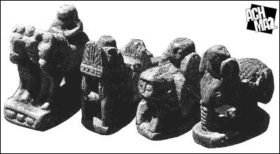 Chess pieces made of ivory from the seventh and eighth centuries (found in Samarkand)
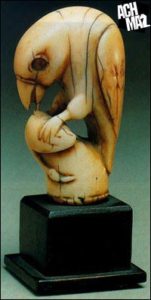 Rokh nut – related to the eighth to tenth century (found in Fergana)
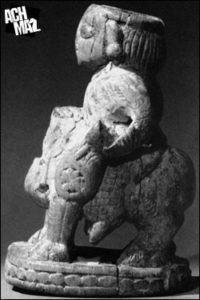 The bead of the minister (maybe also an elephant) from the seventh and eighth centuries (found in Saqezabad)