

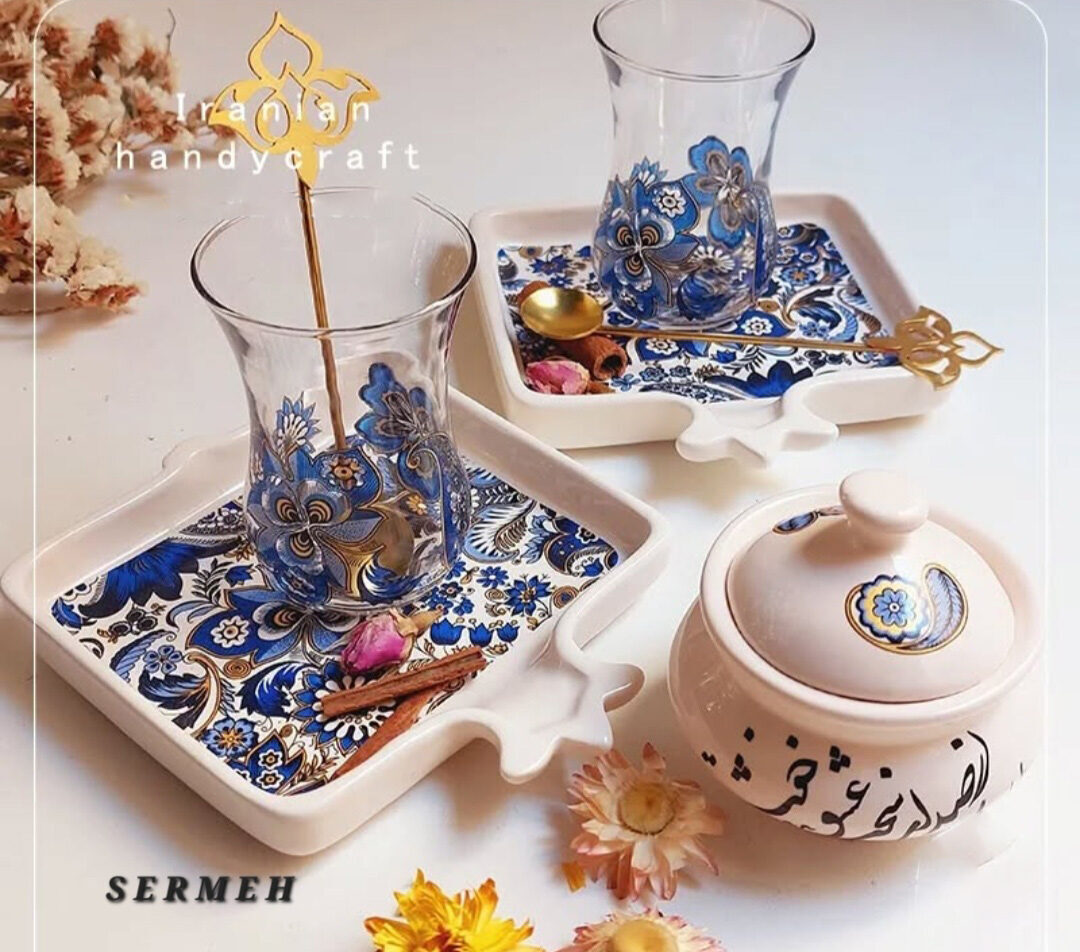
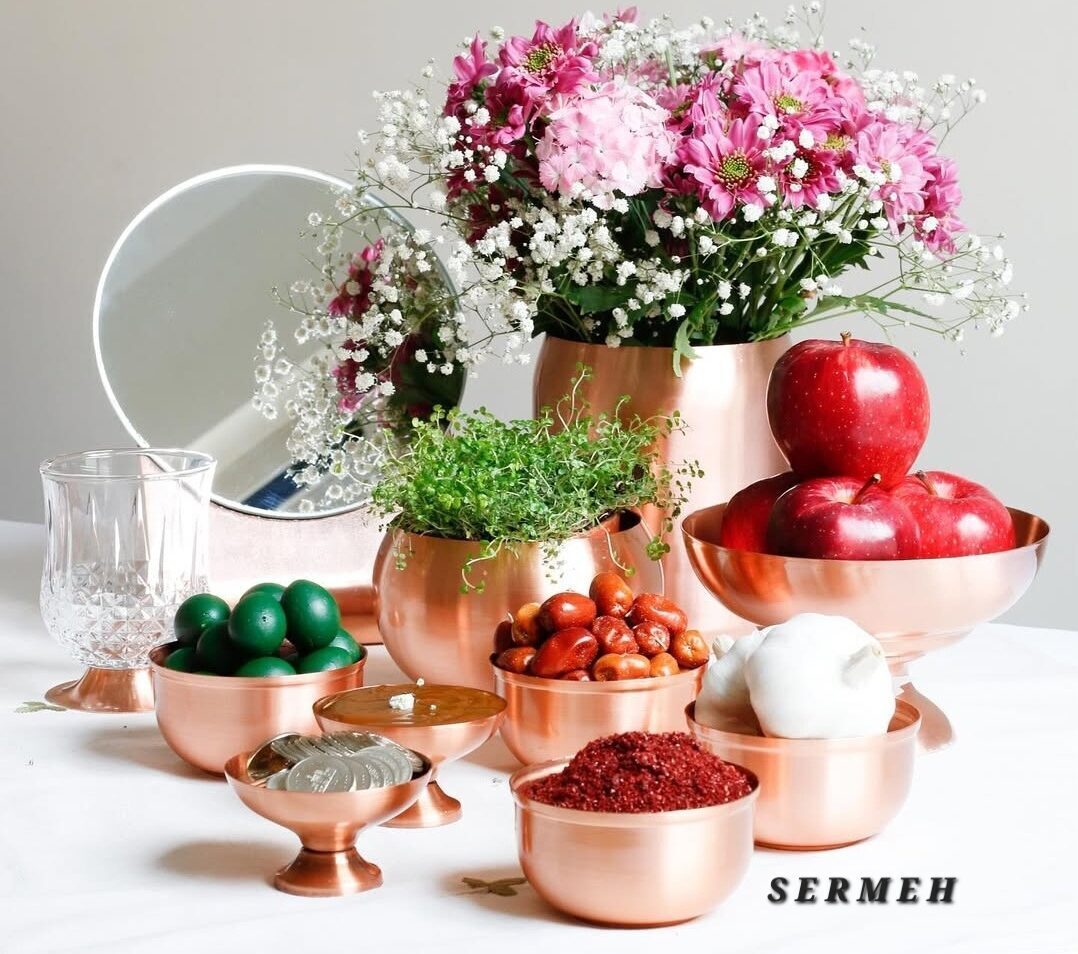
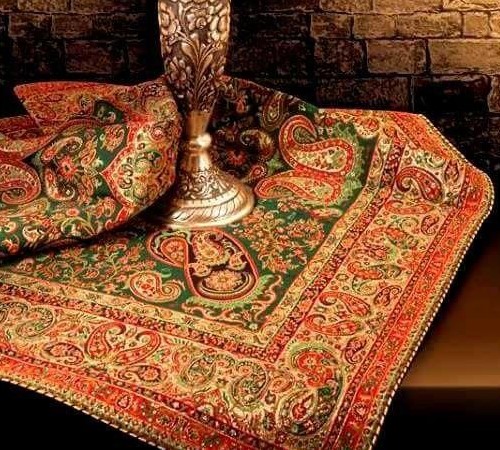
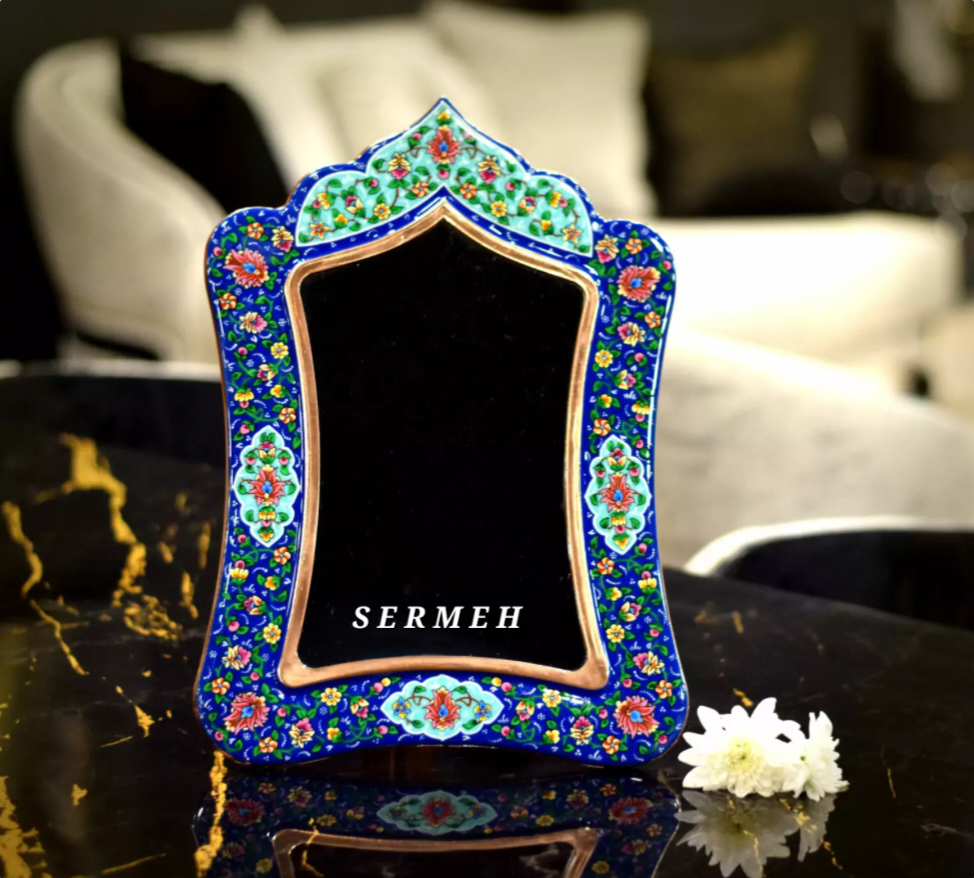

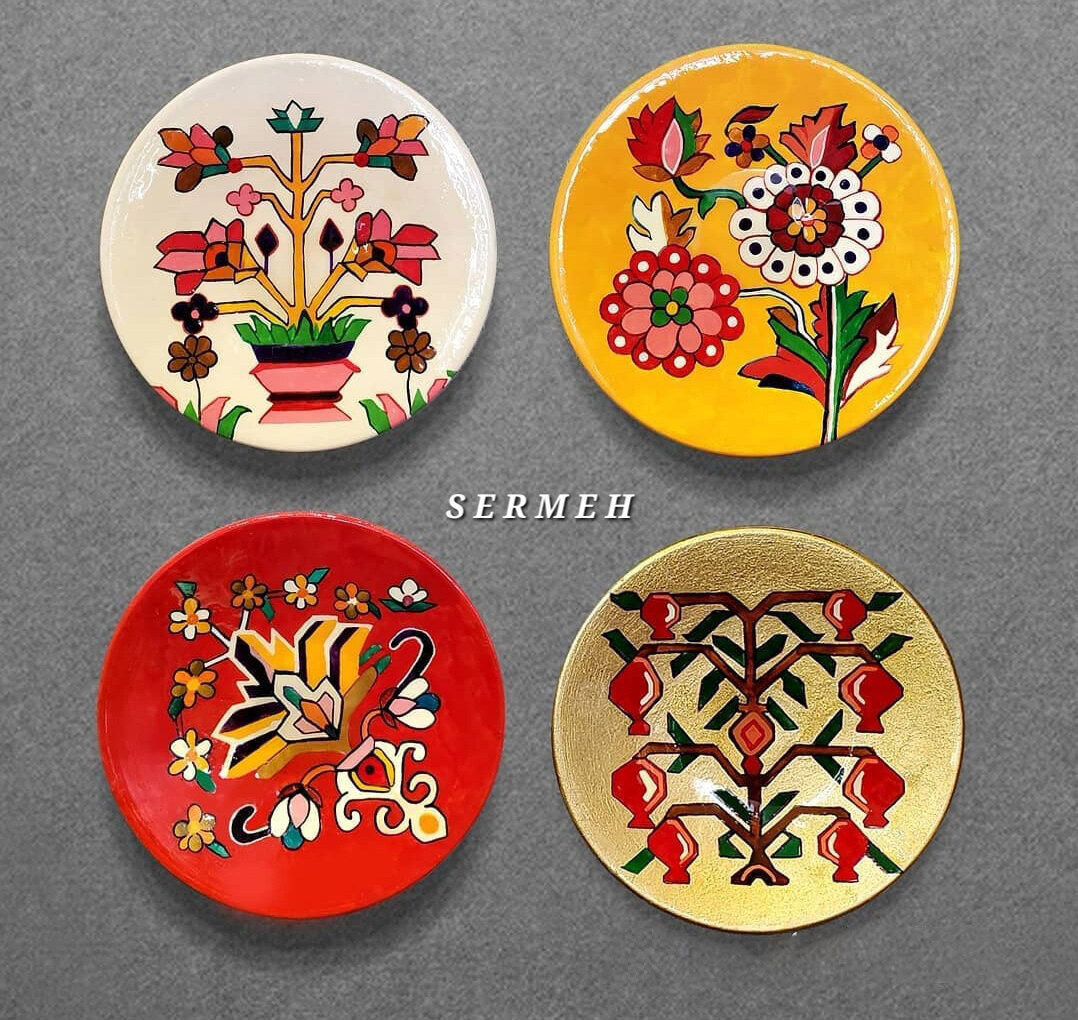
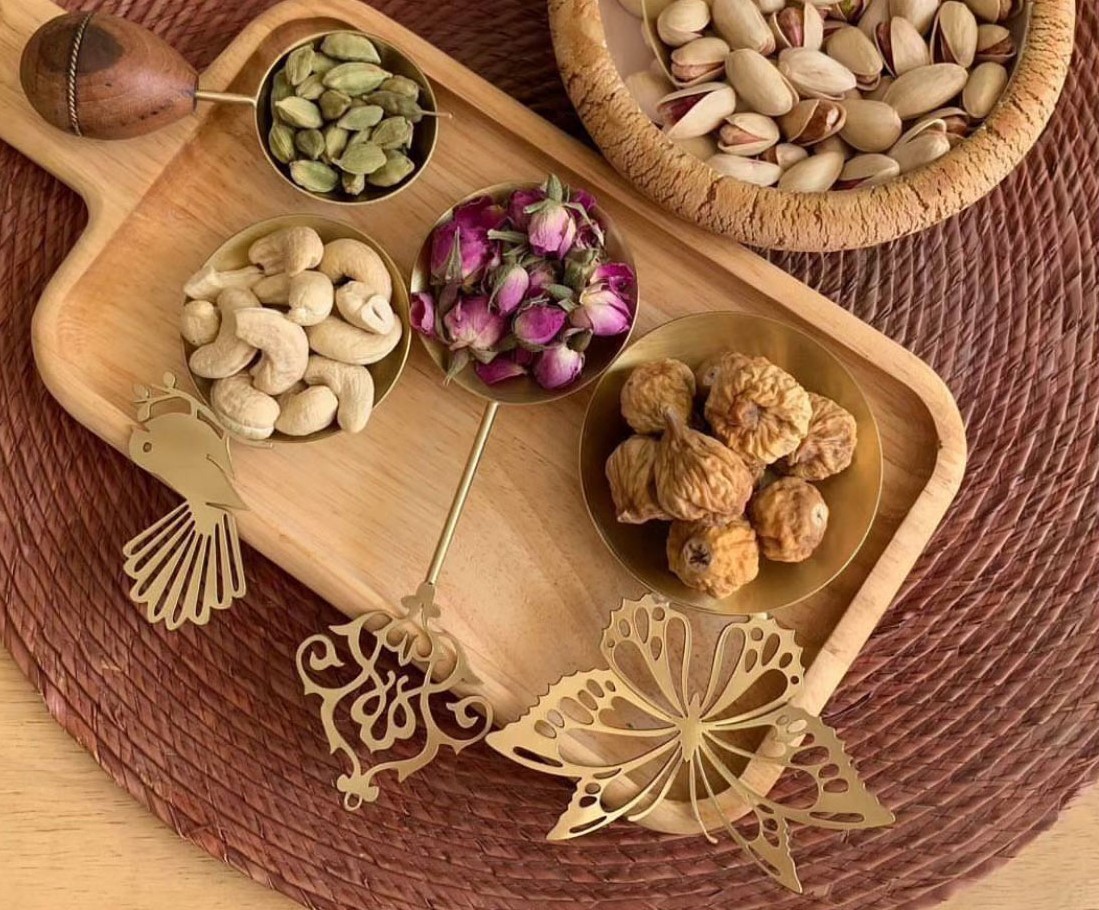
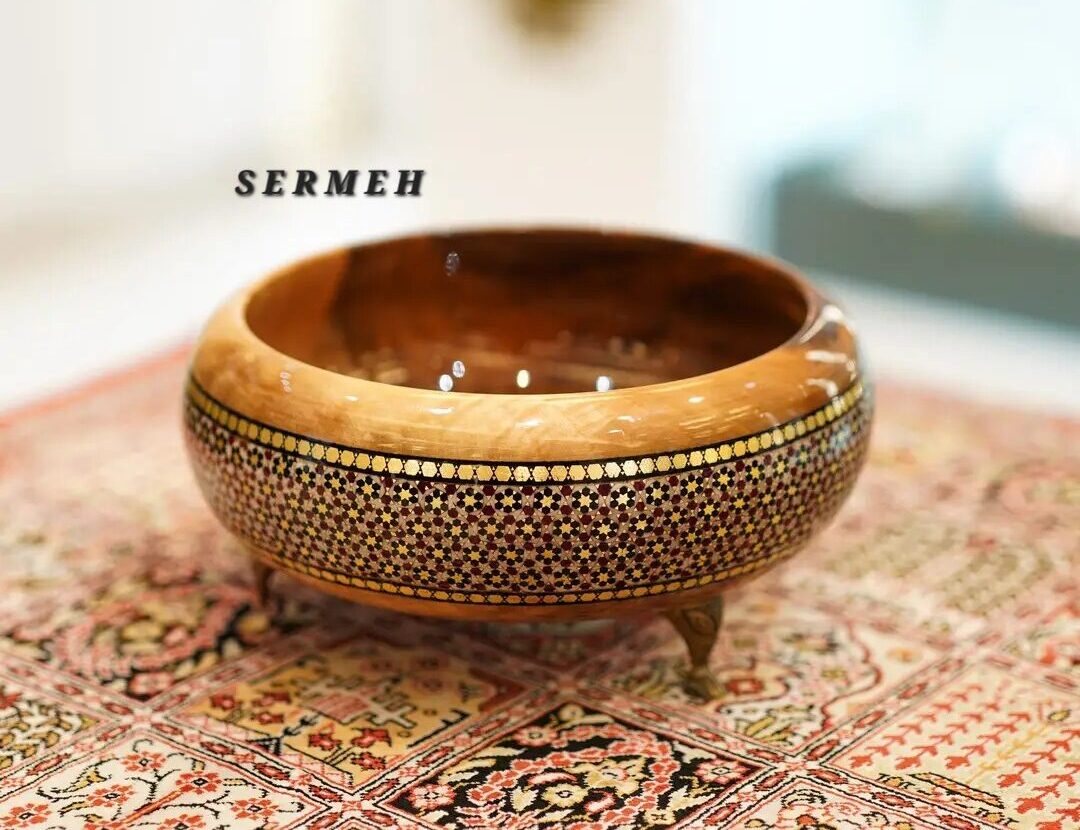
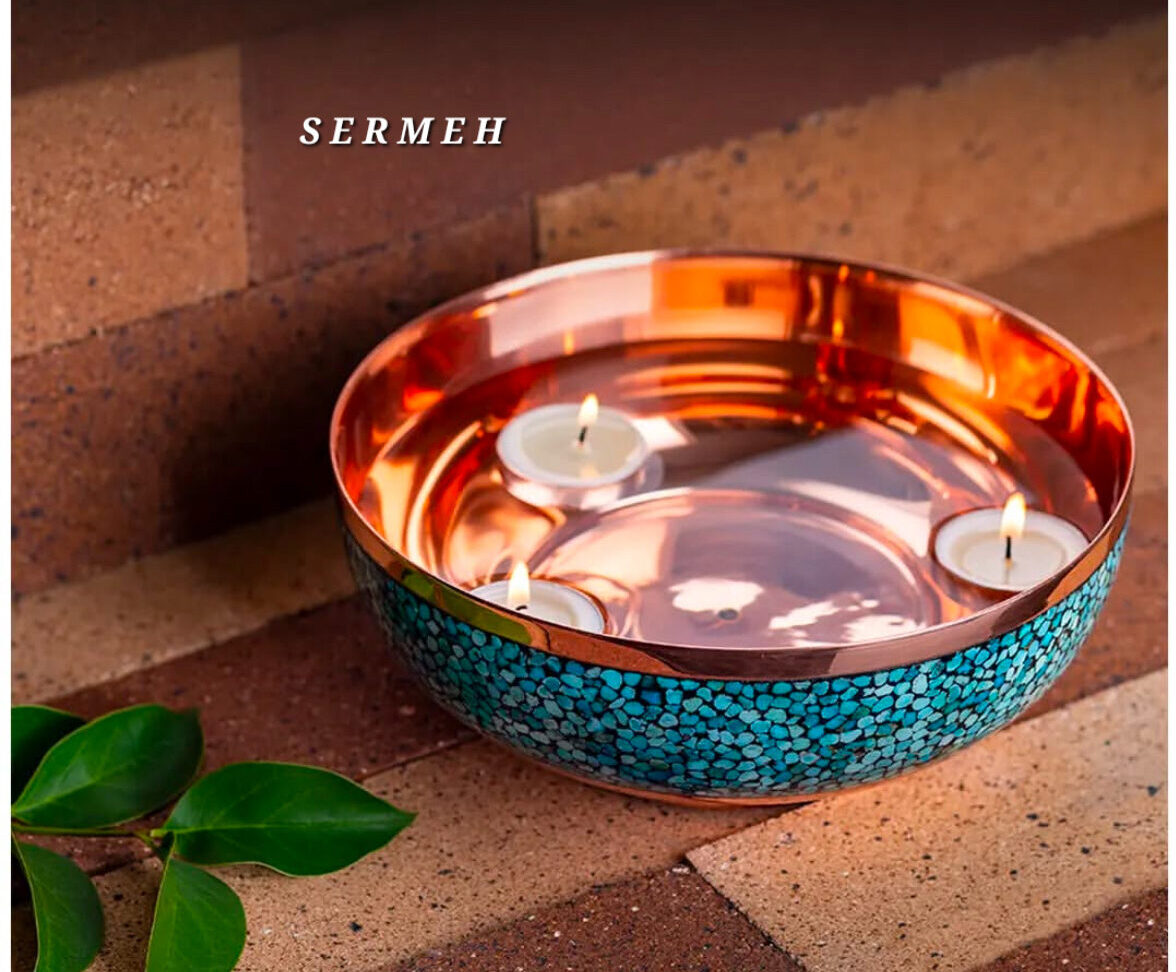
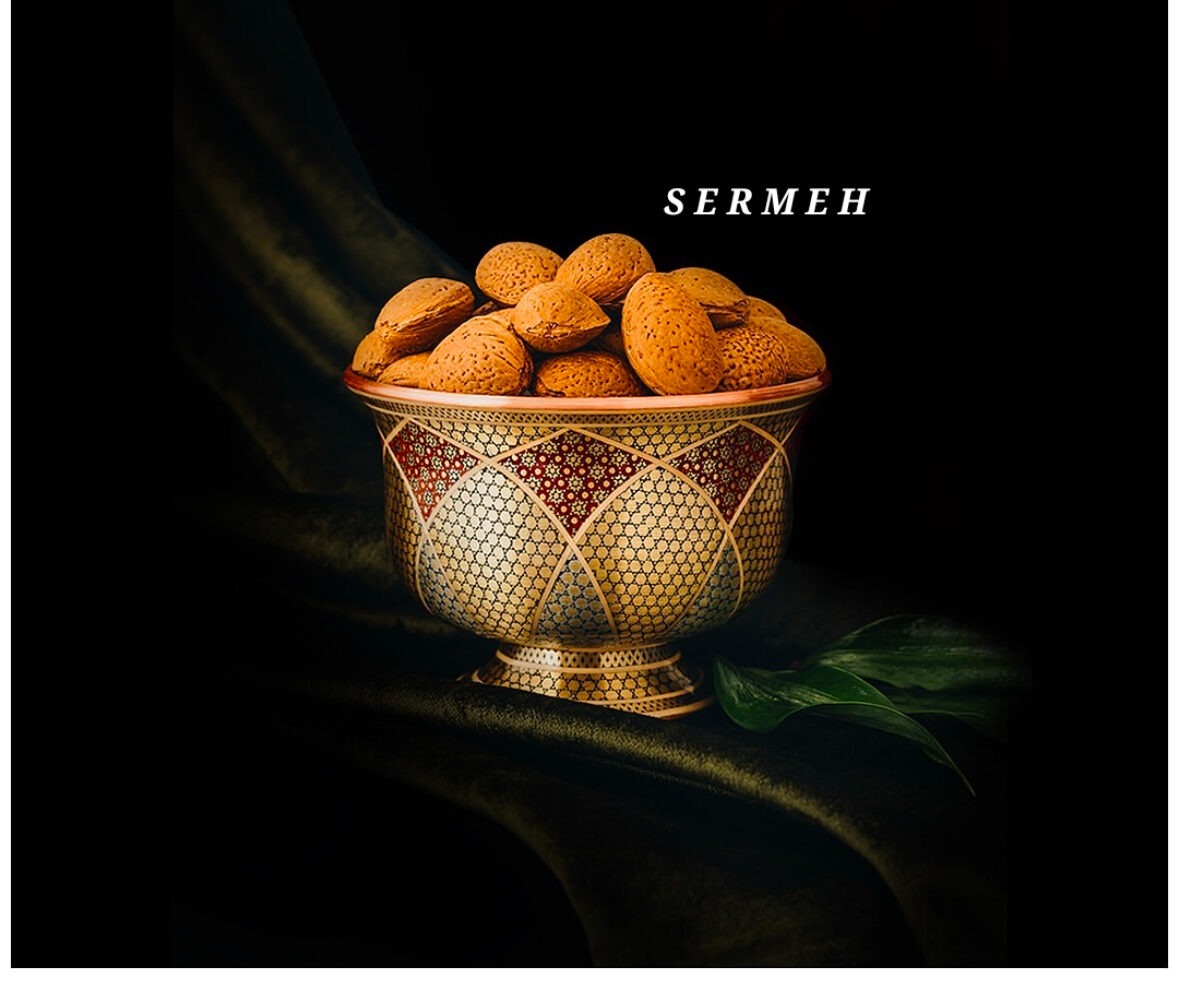

Handmade Persian ceramics Serving Platters
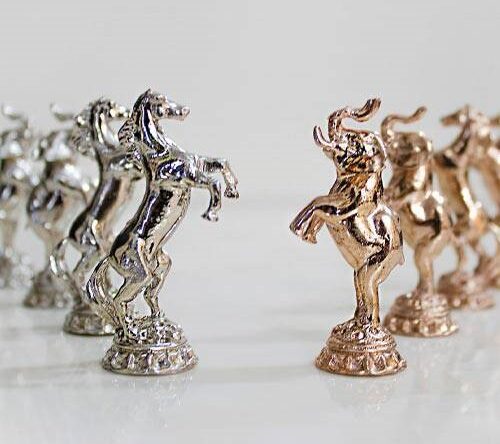
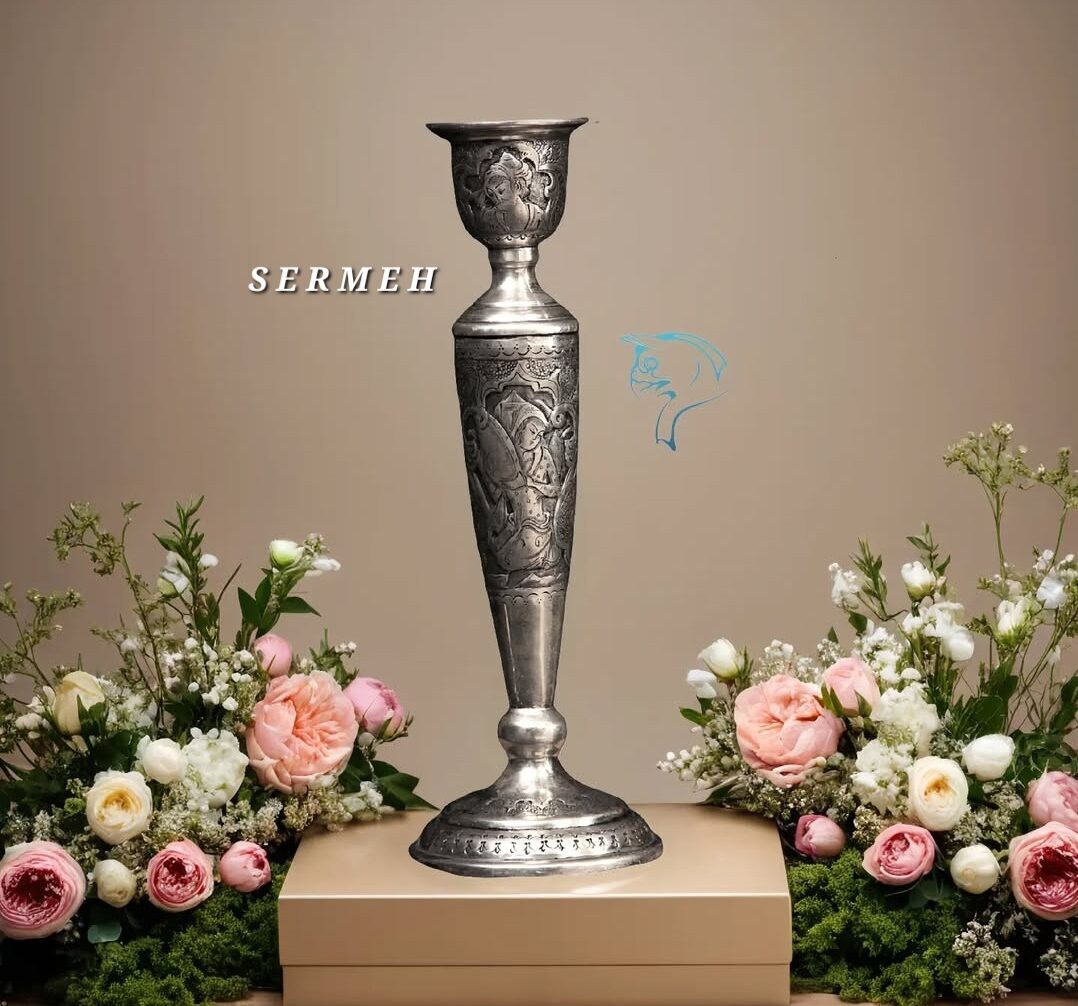
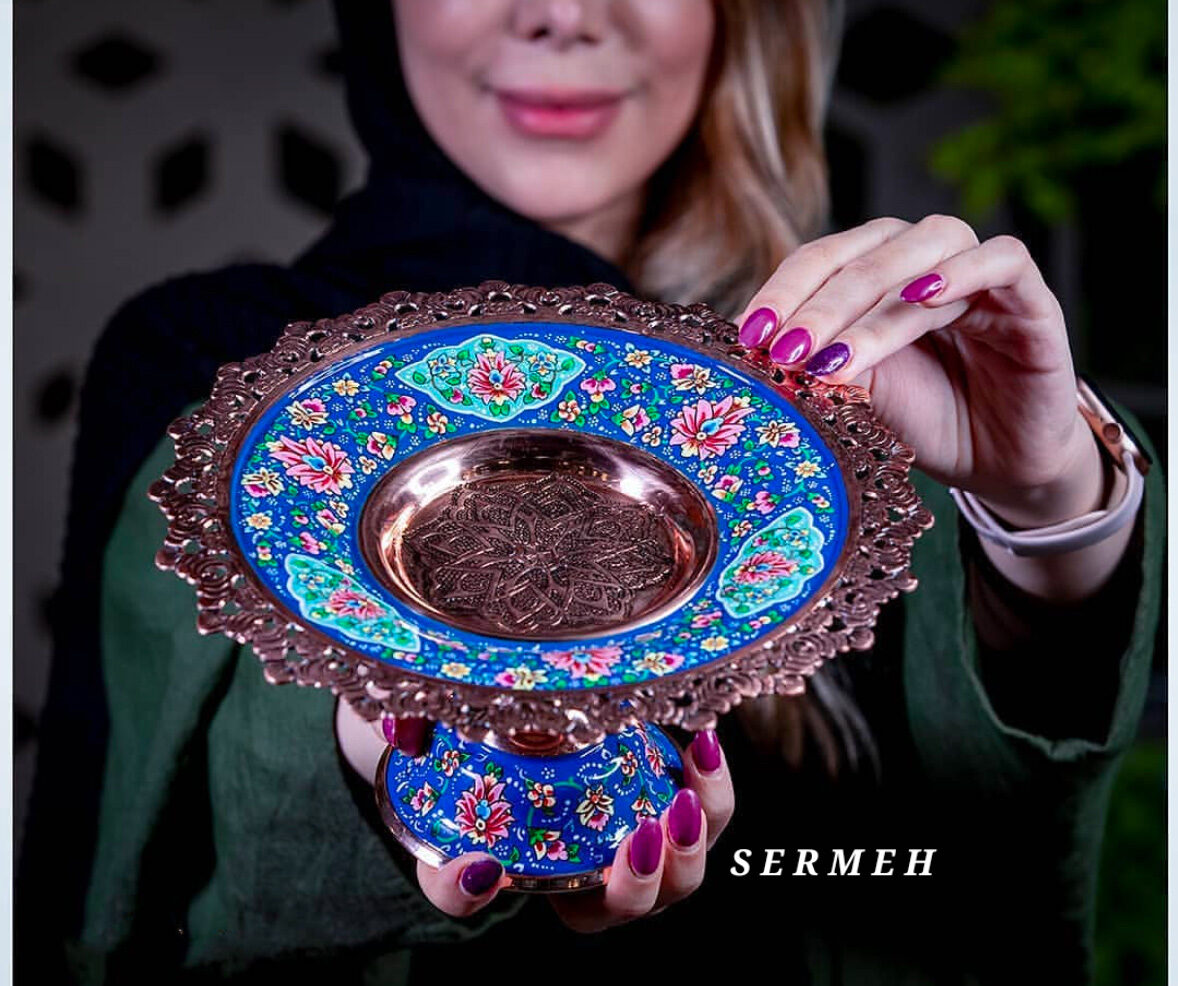
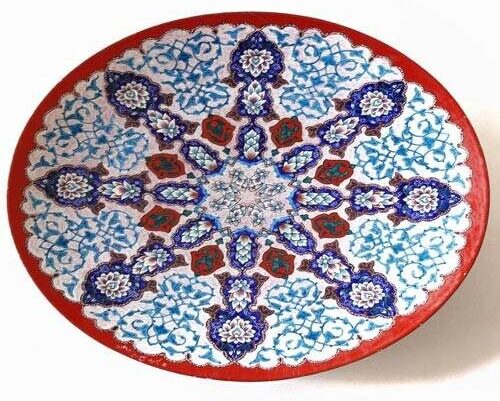
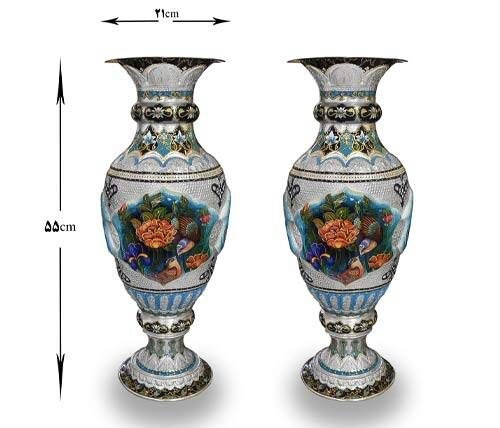
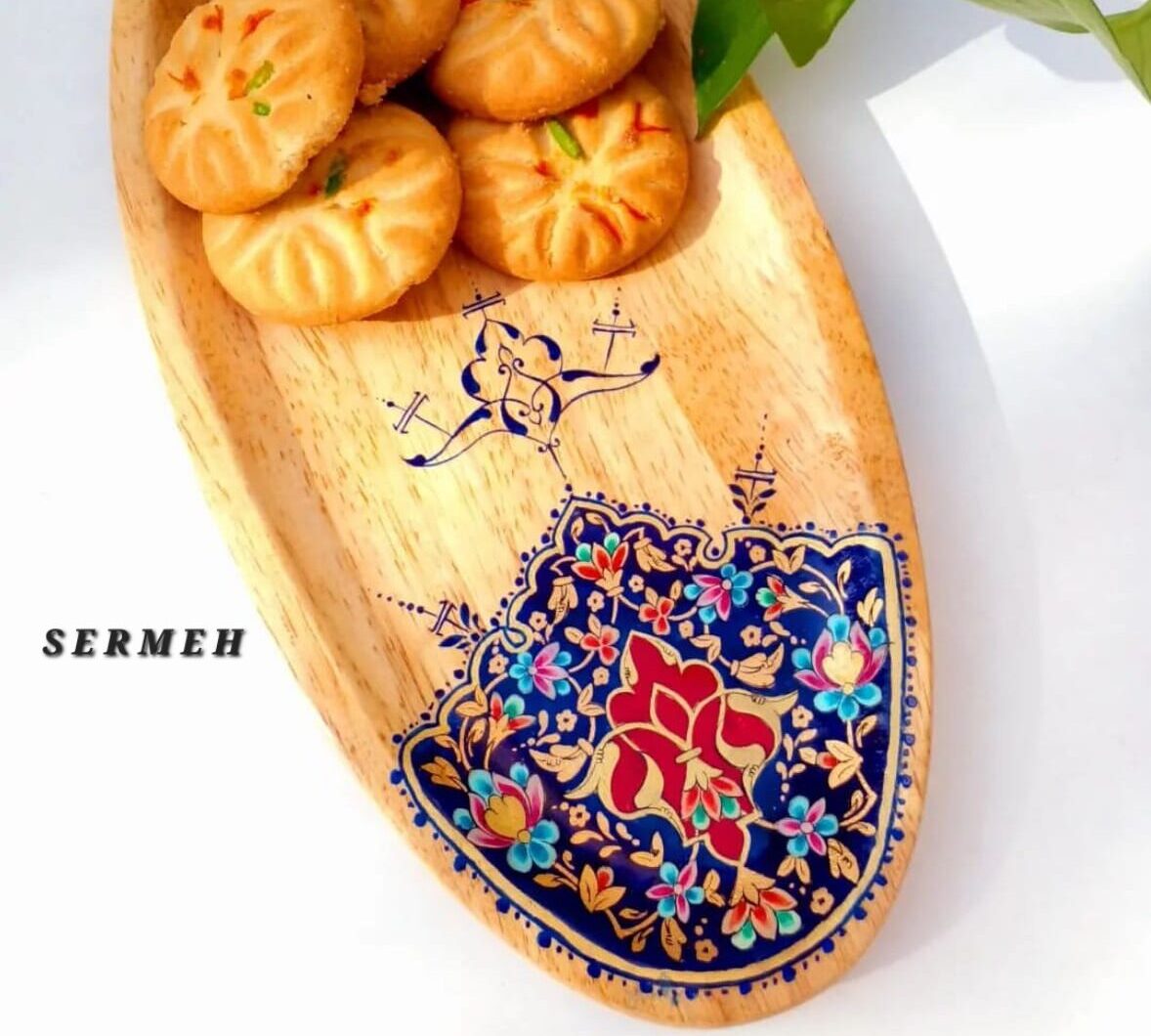
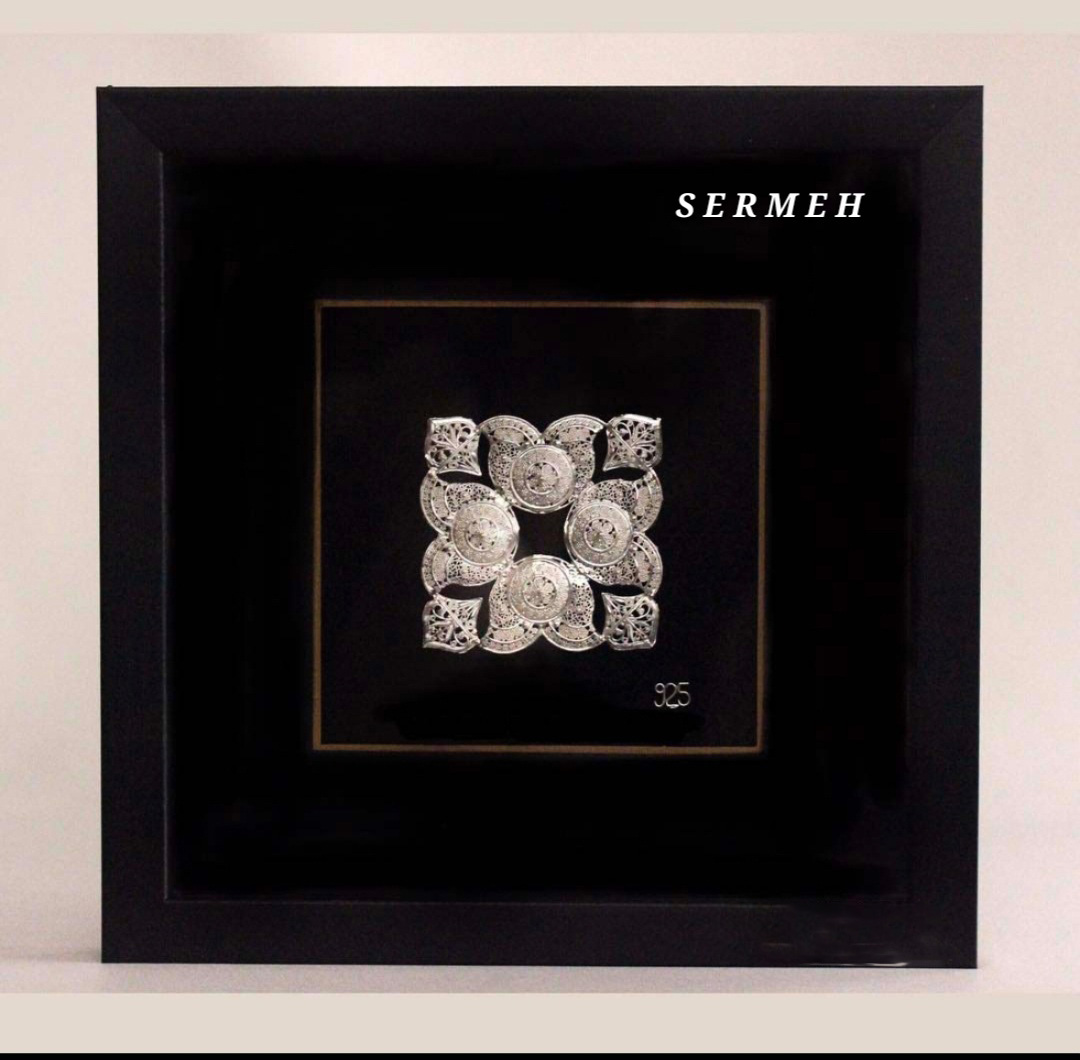
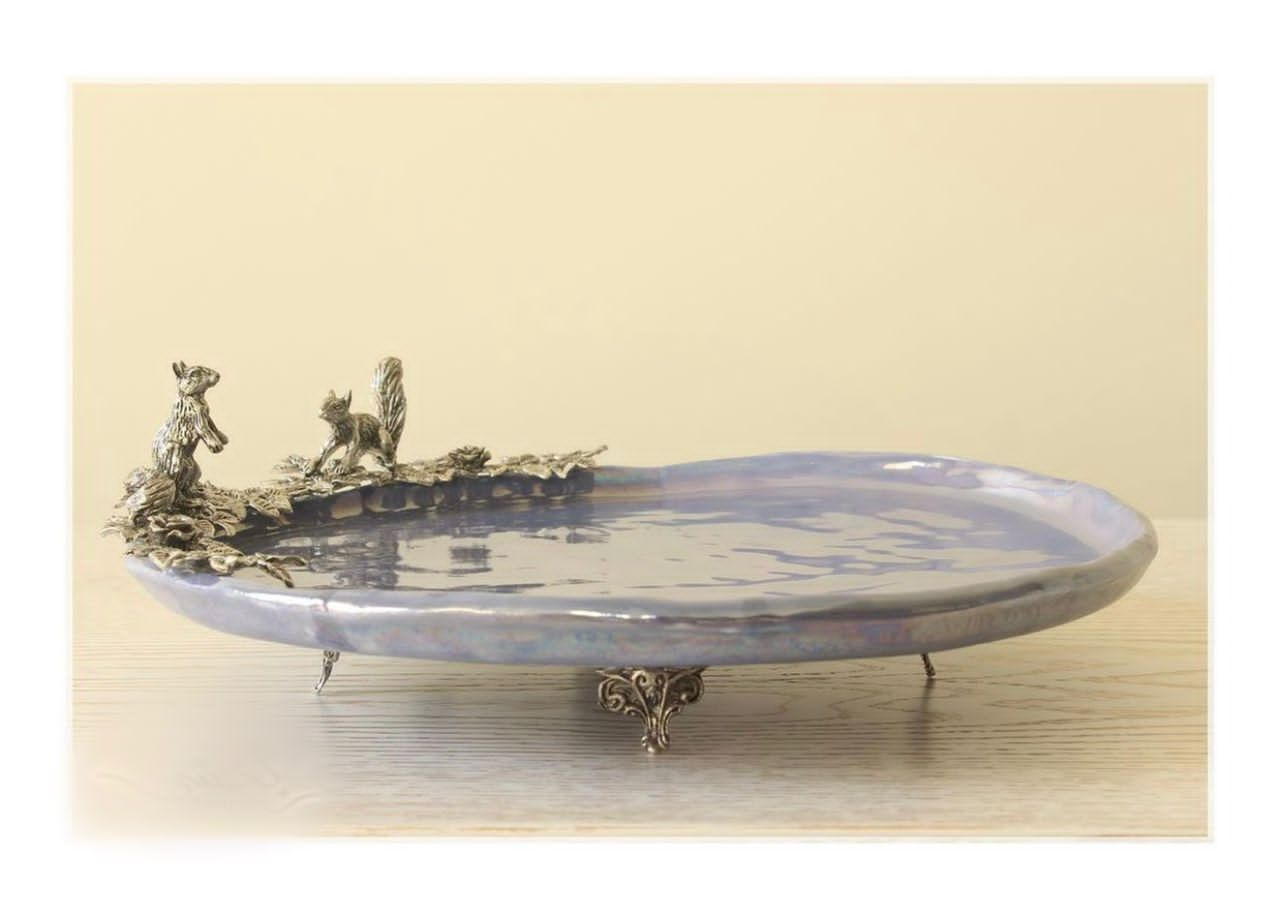
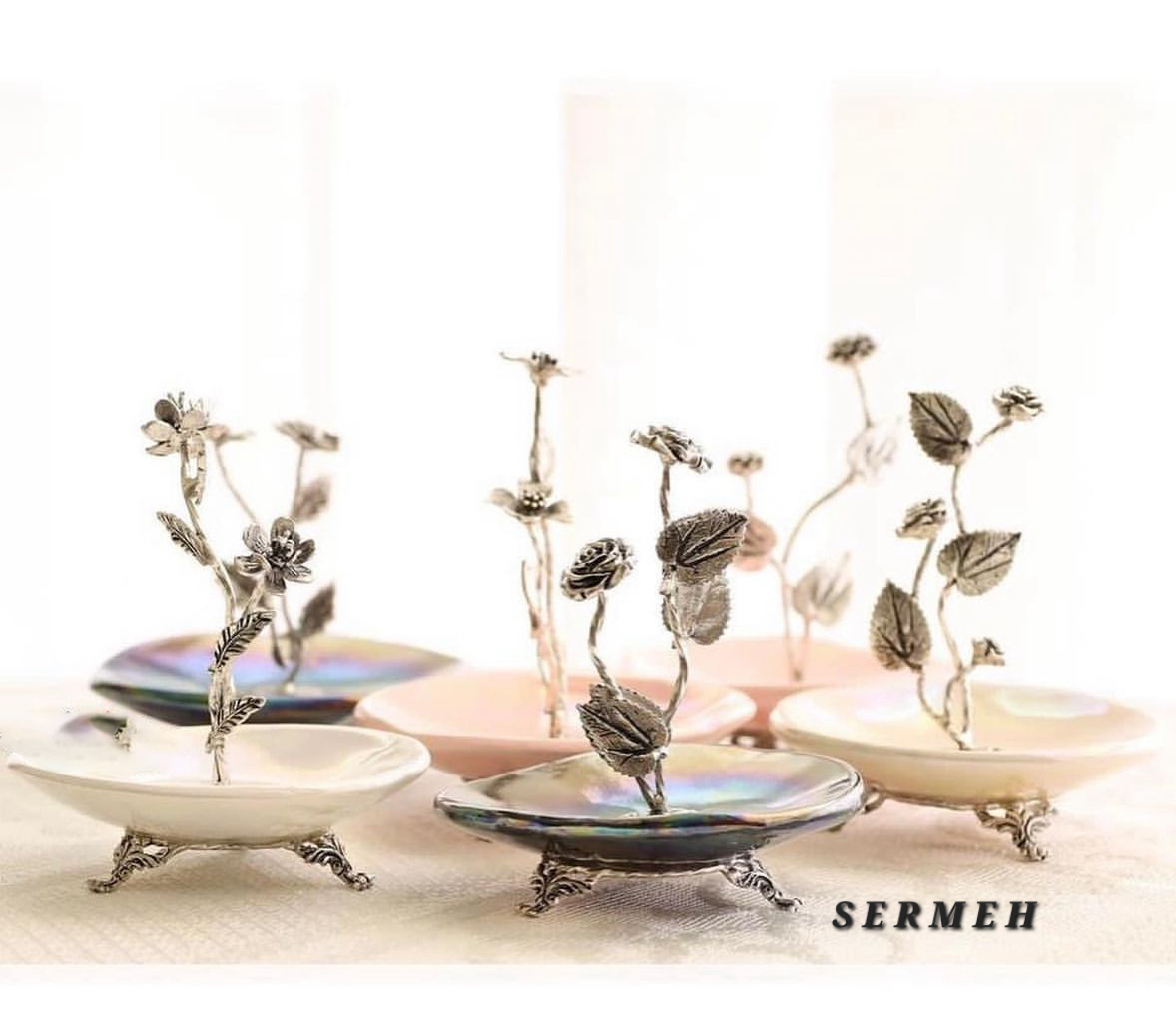
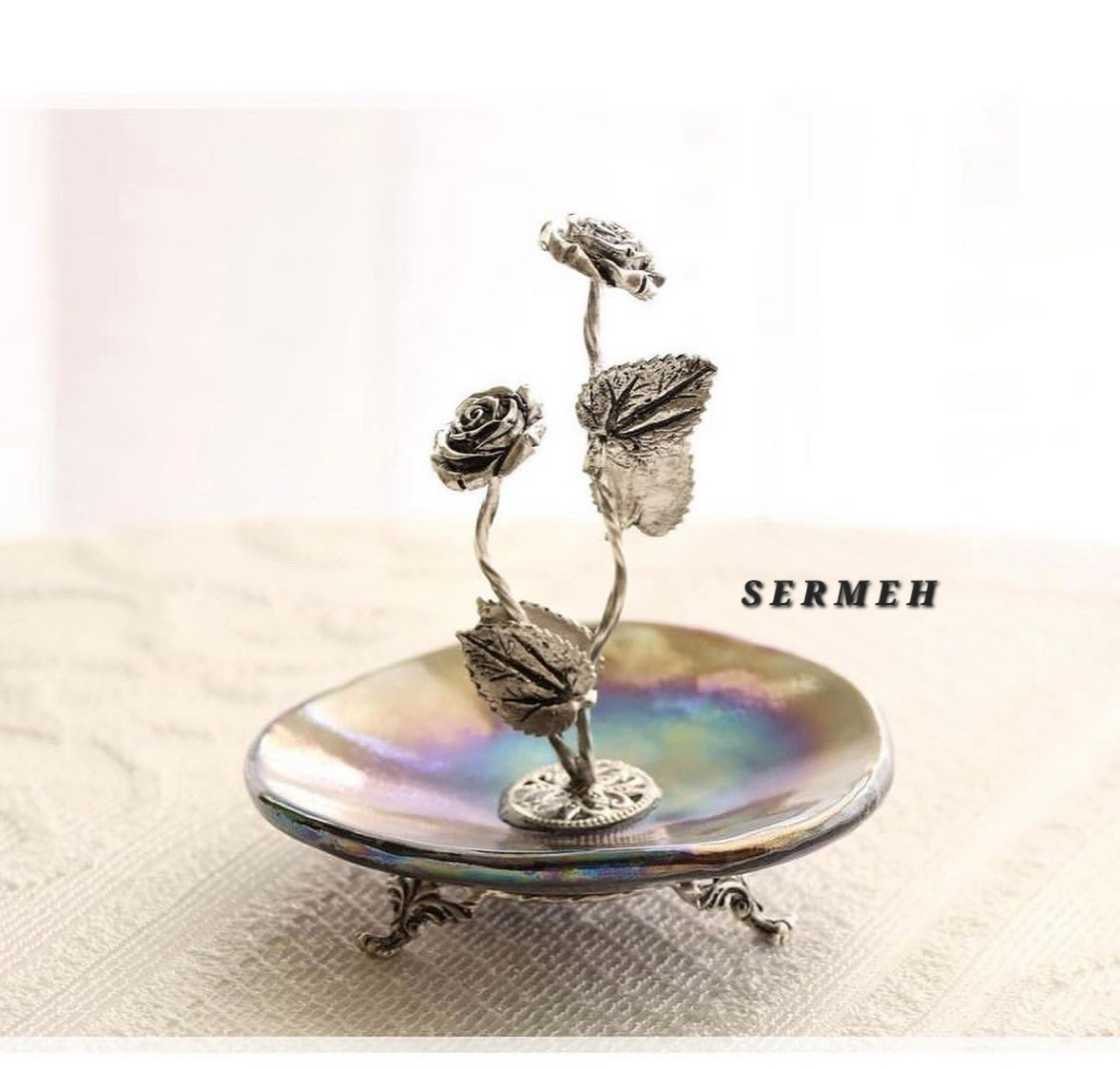
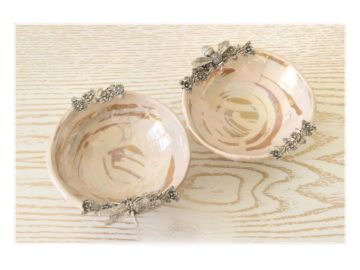
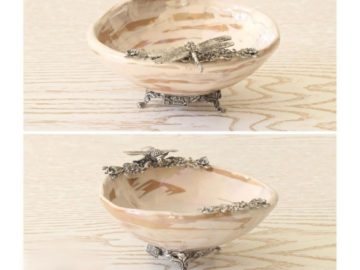
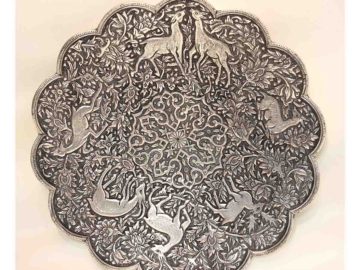
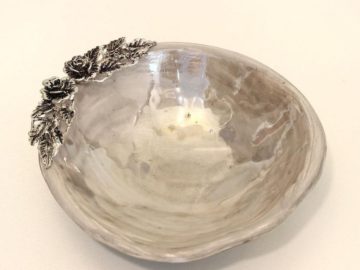
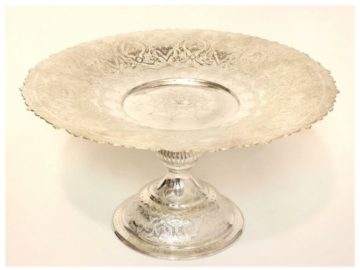
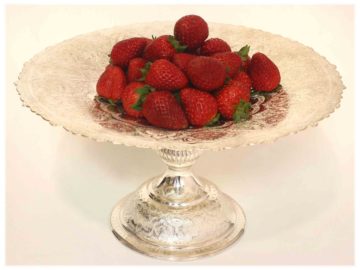
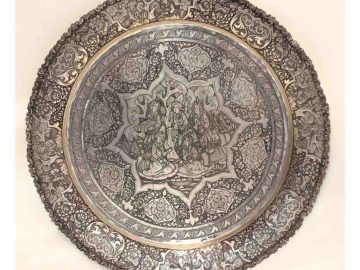
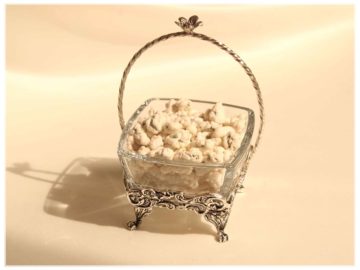
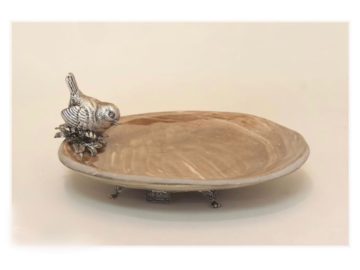
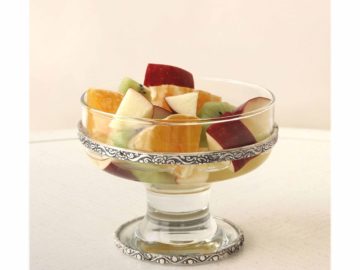
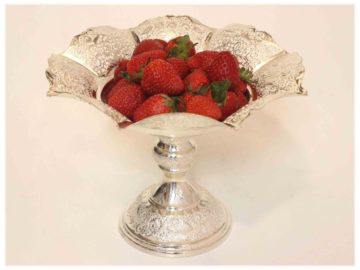
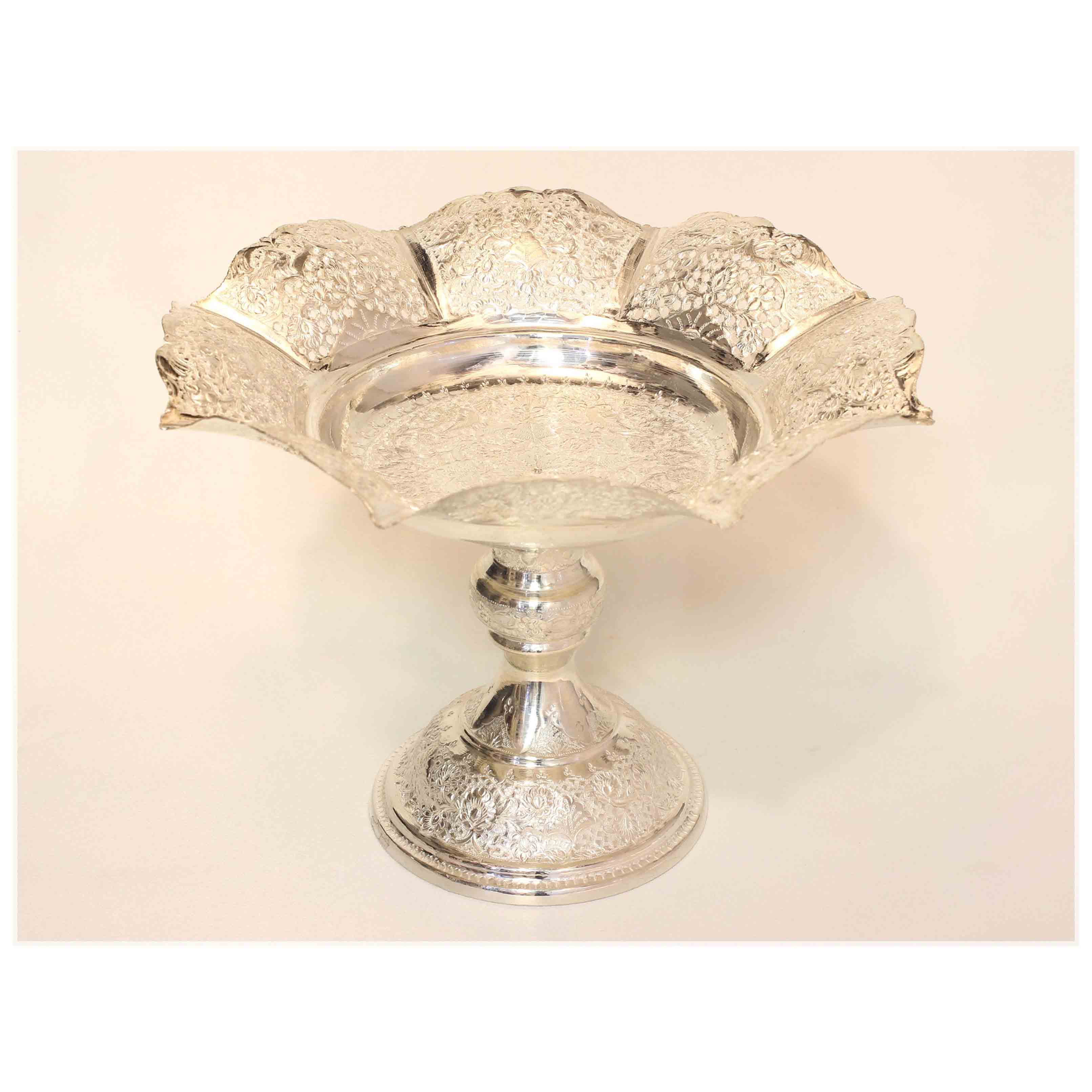
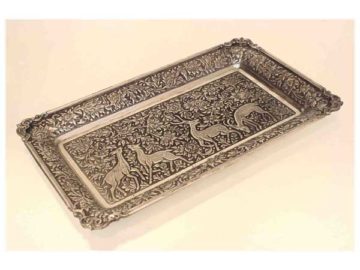
As demonstrated in the examples above, silver was primarily used to craft fine objects of tableware, chocolate eating dishes, etc. This beautiful Persian ceramic dish is designed with a silver ornament.
The fashion for silver tableware emerged together with the taste for fine dining. Elaborate dining practices became popular among the French elite in the late 17th and 18th Centuries and were soon picked up elsewhere in Europe.
Mealtimes were ceremonious occasions, which often consisted of several courses of food, beautifully presented on fine pieces of silver with Persian ceramics. The abundance of silver — plates of varying sizes, cutlery, sauceboats, salvers, centerpieces, and candelabra — was an elaborate and magnificent display of status and wealth, intended to impress dinner party guests.
With the discovery of the New World, new foodstuffs began to be imported into European countries. New forms of silverware were thus created to serve these new foods, such as the coffee and tea pot.
Silver is resistant to oxidation and corrosion, but it may stain, which can be solved with a little polish to make it shine for a lifetime. Since silver is soft and delicate, it should be alloyed with base metals such as copper, such as sterling silver with 92.5% silver and 7.5% copper.
The storage of these dishes is such that if they are not placed in a wet place and cleaned with a dry cloth, they will not change colour for a few years, but due to their silver coating, after a few years, the colour will be a bit darker with Re-plating will be like the first day.
Reviews
There are no reviews yet.