


Persian Painting
It’s true to declare that it was at the end of the Qajar time, or thereabouts, that Persian painting in its several branches, overtook its nadir. The last half-century has seen a significant renaissance, helped by the foundation of art schools in different parts of the country.
By the end of the ninth century and the beginning of the tenth century, with the fall of the Abbasids, the last Arab dynasty’s more than three hundred years of administration over Persia ended.
*Buy online Persian painting (negargari)*
Animal shape
Animal shapes were so illustrious in the history of Persian painting because Divs, Dragons, and Giant Snakes were famous shapes inspired by rich literary explanations. Birds, Lions, and Elephants populated the hunting scenes. These are the most important appearances of Iranian paintings, which are mostly seen in miniature paintings.
Persian dynasty
 Many Persian series achieved power one after the other for the next ten centuries up to the end of the monarchy in Iran in 1979. It was only after the end of the Arab swing that a motion towards rediscovering the Persian language, pre-Islamic cultural values, and arts, the revival of the Zoroastrian religion in a Persian Islamic body, Shiism, and a sense of nationhood among the Persians began.
This movement became faster and more powerful, particularly under the Safavids who governed Persia from the sixteenth to the eighteenth centuries (Canby, 1999). Safavid governors, who were familiar with the arts of poetry writing, calligraphy, and painting, surrounded themselves with a cycle of court artists, for instance, the court poets, painters, calligraphers, illustrators, and architects.
Research staff in painting
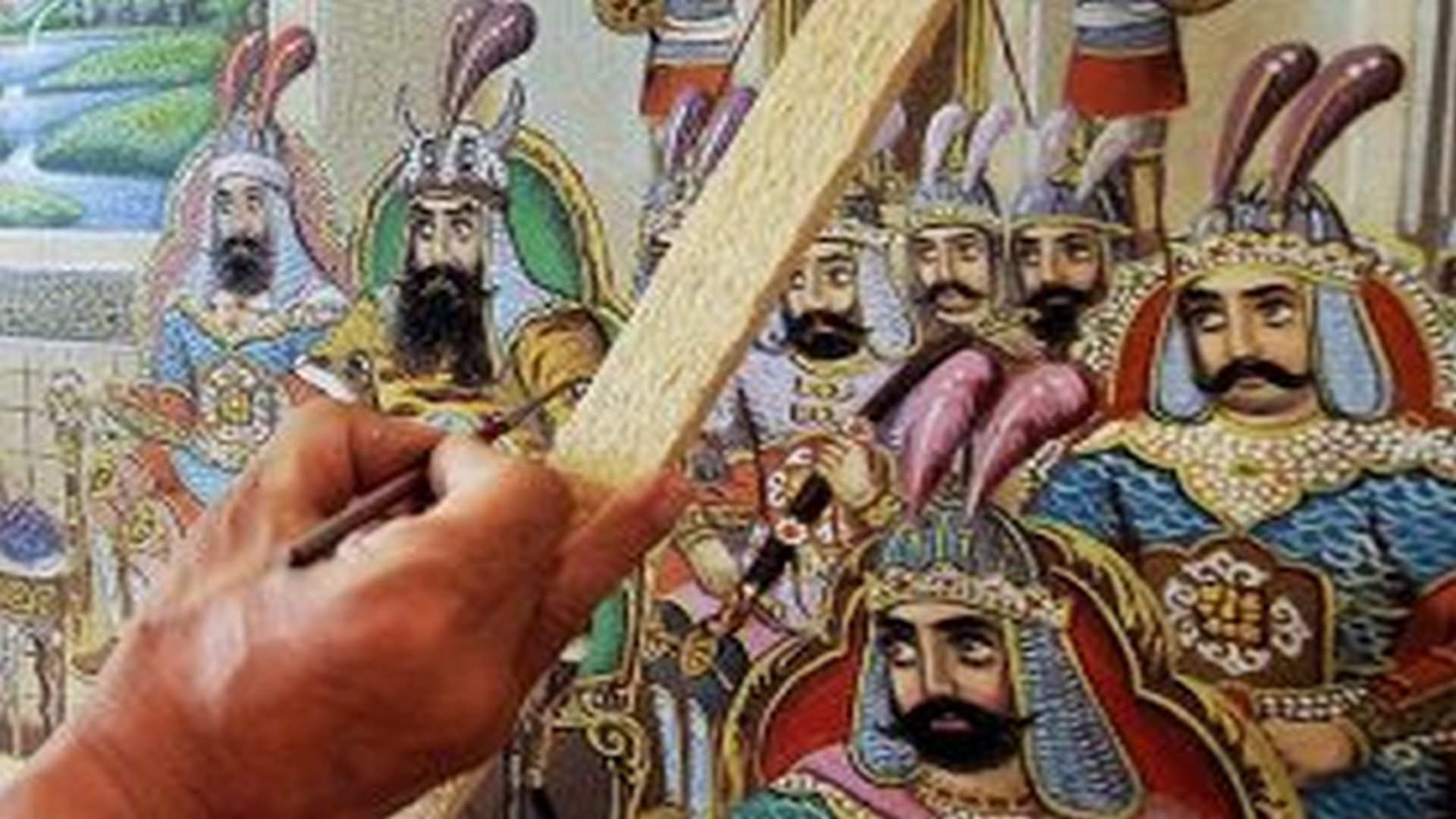
Iranian research staff are unwilling to use the word miniature, which is customary for all works of art of miniature size. Iranian research staff, instead, chose the word Negareh, which is back to the style than the size of a painting. It was a fact that the History of Persian Painting in miniatures has so long charmed and extraordinary the world that it has been greatly supposed that Persian talent for painting found its only expression in this subtle and exquisite art. The walls of the locations of Cyrus and Darius were luxuriously ornamented with polychrome faience, a lot of examples are in existence, while the more fragile mural painting may have been employed to some extent.